
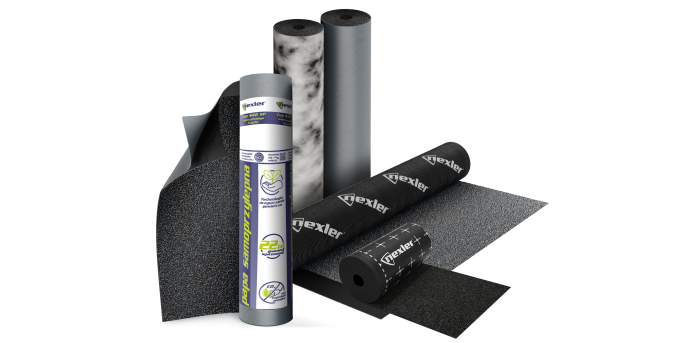
What to look for when choosing and installing bituminous felt on a roof?
Roofing with bituminous felt is one of the most popular solutions used in construction. Thanks to its excellent waterproofing properties and relatively simple application, bituminous felt is a popular choice for both professional roofers and DIY enthusiasts. To ensure that a roof covered with bituminous felt remains durable and reliable for years to come, it is worth paying attention to several key aspects of selecting and installing this material.
The most common mistakes when selecting and installing bituminous felts
Installing bituminous felt on a roof requires precision and knowledge of the technology. Even minor mistakes can lead to problems with waterproofing and the durability of the covering. One of the common mistakes is the inappropriate selection of bituminous felt – for example, a product designed for pitched roofs will not work on flat roofs. It is equally important to weld the bituminous felt correctly, as both overheating and underheating can affect its waterproofing properties.
Another problem is installation that does not comply with the manufacturer’s recommendations, e.g. the use of mechanical fasteners instead of welding, which can result in leaks. It is also important to remember to prepare the substrate properly – it should be dry, stable and free of dust and oily substances. Neglecting this stage of the works can significantly reduce the adhesion of the bituminous felt, leading to leaks and damage to the roof covering.
Which bituminous felt to choose?
Flat roofs dominate in new construction projects. For this type of roof, whether it has a thermal insulation layer or not, SBS-modified weldable bituminous felts with a durable reinforcement, e.g. glass fabric or non-woven polyester, are an excellent solution. In the table below, we recommend bituminous felt types that work well as a vapour barrier and/or effective waterproofing on various substrates.
- NEXLER PREMIUM PYE PV250 S48 weldable underlay bituminous felt
- NEXLER PREMIUM PYE PV200 S40 weldable underlay bituminous felt
- NEXLER Stick self-adhesive underlay bituminous felt
- NEXLER PLAN PYE G200 S30 SP self-adhesive underlay bituminous felt
- NEXLER PREMIUM PYE PV250 S53H weldable top layer bituminous felt
- NEXLER PREMIUM PYE PV200 S40H weldable top layer bituminous felt
What if the roof is damp? What type of bituminous felt should be used in this case?
A damp roof requires immediate attention, as moisture penetrating between the layers of the roofing can reach the ceiling and cause its degradation. In this case, specialised renovation bituminous felts are recommended, as they allow moisture to be removed through ventilation channels.
- in a single-layer system: NEXLER Renovation – this is bituminous felt for application to the top layer of the roof, and special ventilation channels ensure that moisture condenses and is drained away from the roof.
- in a two-layer system: as an underlay bituminous felt with the aforementioned NEXLER Termoklej channels. It acts as both a vapour barrier and an adhesive layer for insulation boards. As it is an underlay bituminous felt, it also requires the application of a top layer bituminous felt, e.g. NEXLER PREMIUM PYE PV250 S53H.
Let’s get to work!
So what should you pay attention to when installing bituminous felt?
To ensure the durability of your roofing, there are a few important rules to keep in mind. First of all, the substrate must be dry, clean and level. It is worth using bituminous primers to improve adhesion (e.g. NEXLER BITFLEX Primer or NEXLER Penetrator G7). Bituminous felt overlaps should be at least 8 cm for longitudinal joints and 12 cm for transverse joints. It is also important to heat the entire surface of the bituminous felt evenly to eliminate the risk of leaks.
Weather conditions are also important – it is not recommended to install bituminous felt in rain, strong wind or at temperatures below 5°C. Following these rules will help you avoid leakage problems and ensure the longevity of your roofing.
What to consider when choosing a product and contractor?
A roof that has been properly constructed in accordance with roofing practices and manufacturer’s guidelines is covered by a very long warranty. Therefore, it is worth hiring a contractor who is recommended and authorised by the manufacturer.
Flat roofs with a thermal insulation layer require bituminous felt on non-woven polyester or glass fabric reinforcement with a high SBS content, which ensures high flexibility at temperatures as low as -25°C. For the waterproofing underlay layer, we recommend NEXLER PREMIUM PYE G200 S40 weldable bituminous felt or NEXLER PJ PYE PV200 S40 FF foil-coated bituminous felt. The top layer can be made using NEXLER PRERMIUM PYE PV200 S40H or NEXLER PJ PYE PV250 S52H bituminous felt.
For flat roofs without a thermal insulation layer, a base layer of underlay bituminous felt on glass veil (e.g. NEXLER STANDARD V60 S30) and top layer bituminous felts on non-woven polyester (e.g. NEXLER PREMIUM PYE PV250 S56H or NEXLER PREMIUM PYE PV250 S53H)
For wooden roofs, on the other hand, it is recommended to use bituminous felt with a strong reinforcement and a high SBS modifier content. There are two ways of covering wooden roofs: single-layer or double-layer. A single layer can be covered with NEXLER Superdach 20 bituminous felt, while two-layer systems typically consist of an underlay (e.g. NEXLER Stick self-adhesive underlay bituminous felt fixed mechanically or NEXLER Optimax bituminous felt membrane) and a top layer (e.g. NEXLER Top S42 SP self-adhesive top layer bituminous felt).
How should a roof covered with bituminous felt be maintained?
Regular maintenance extends the life of the roof. It is recommended to check the condition of the roofing, especially after winter, and to regularly clean the surface of leaves, branches and dirt. The use of protective coatings (e.g. NEXLER Izofol Roof protective and decorative coating or NEXLER Reno Bit roof coating maintenance compound) will additionally protect the bituminous felt from weather conditions.
Other articles from the Roof waterproofing category that may interest you
 Article
A roof with a vision – green solutions for investments
Green roofs in modern construction are not a passing trend, but a real market need driven by climate, urbanisation and regulatory challenges. They are a key element of sustainable development strategies, not only distinguishing investments on the market, but also having a real impact on their value and functionality. It is a space where ecology meets long-term safety and technical durability.
 Article
The unsung hero of the roof – NEXLER NOx Cut
Growing social expectations and stricter environmental regulations are changing the face of the construction sector. Today, responsibility for the environment and the health of users is becoming an important part of the investment process. Modern construction is increasingly turning to solutions that not only reduce carbon footprint and energy consumption, but also improve quality of life.
 Article
Why is it worth priming the substrate before welding bituminous felt?
A roof that leaks after two seasons? Complaints, lost customer trust – something every roofer wants to avoid. That is why proper substrate preparation, including priming, is not a detail, but the foundation of durable and trouble-free roofing. Although it may seem like a mere ‘formality’, in practice, priming has a huge impact on the durability, safety and effectiveness of the entire waterproofing system. In this article, we explain briefly and concisely why priming is not an option but a necessity.