
- Article
How to Protect Yourself from Carcinogenic Radon?
Radon is an invisible, odorless, and tasteless radioactive gas that can infiltrate our homes and workplaces, posing a serious health risk. Long-term exposure to elevated radon levels is, in fact, the second leading cause of lung cancer after smoking. Therefore, it's crucial to understand precisely what radon is, the threats it presents, and, most importantly, how to effectively protect yourself against it.
What is Radon?
Radon is the heaviest noble gas, formed through the decay of radium, which itself is a product of uranium decay naturally present in the Earth's crust. Because it is colourless, tasteless, and odourless, its presence can only be detected using specialised detection devices. Radon enters the atmosphere from soil, groundwater, and rocks, from where it can then infiltrate the interiors of buildings.
Health Risks Associated with Radon
Prolonged exposure to high concentrations of radon significantly elevates the risk of developing lung cancer. When radon particles are inhaled, they become deposited in the lungs. There, they undergo radioactive decay, emitting alpha particles. These, in turn, can damage lung tissue, leading to cancer. The likelihood of developing the disease is directly related to both the radon concentration level and the duration of exposure. According to studies, radon is recognised as the second most common cause of lung cancer, trailing only smoking.
How Does Radon Enter Buildings?
Radon enters the atmosphere from soil, groundwater, and even rivers, especially near mine waters. Its most common pathways into homes are through cracks in foundations, faulty insulation, and gaps around pipes and cables. Leaks in basements or on ground floors can be a significant source, particularly in older buildings with less advanced insulation.
Indoor air circulation also plays a role in a building's radon levels. Enclosed spaces lacking proper ventilation can encourage gas accumulation, causing its concentration to rise. The soil directly surrounding a building is crucial for indoor radon concentration and can also impact overall levels. Consequently, structures built on soils with high radon concentrations face a greater risk of elevated indoor gas levels.
Even though radon is heavier than air, it easily enters living spaces through diffusion and convection.* Inside, warmer, lighter air creates a pressure that is several Pascals lower than outside. This results in the "chimney effect” – rising air pulls radon from concrete floor cracks, foundation and wall damage, and leaks where plumbing or sewage systems penetrate the building. Ultimately, this allows the hazardous gas to reach upper floors and other rooms throughout the building.
How to Protect Yourself from Carcinogenic Radon?
Protection against radon should begin at the design and construction stage of any building. Implementing the following strategies is crucial:
Effective Waterproofing: Using high-quality waterproofing materials on foundations, basement walls, and ground floors creates a vital barrier that significantly limits radon's penetration into the building.
Sealing Cracks and Crevices: Regularly inspecting and promptly repairing any leaks or cracks in the foundation, as well as around utility installations, will actively prevent radon from entering.
Ventilation: Ensuring adequate air circulation through well-designed ventilation systems or by regularly airing out rooms effectively helps reduce and maintain lower radon concentrations.
NEXLER's Anti-Radon Product Range
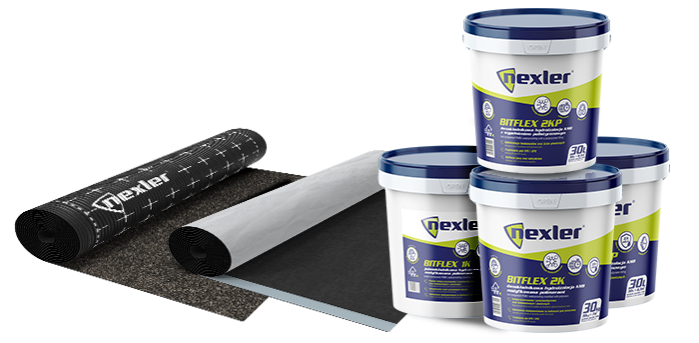
NEXLER provides a comprehensive selection of products specifically engineered to protect buildings from radon infiltration. All these products have undergone rigorous testing by the Institute of Nuclear Physics of the Polish Academy of Sciences and hold hygiene certificates, confirming their suitability for insulating ground-level floors. Our range of products:
Thick-layer waterproofing ( KMB ):
NEXLER BITFLEX 1K – single-component polymer-modified waterproofing
NEXLER BITFLEX 1KP – waterproofing with polystyrene filling
NEXLER BITFLEX 2K – two-component polymer-modified waterproofing
NEXLER BITFLEX 2KP – waterproofing with polystyrene filling
Waterproofing felt roll:
NEXLER Alu Aquastoper SP – highly modified self-adhesive SBS felt for water vapour floor insulation
NEXLER Alu S40 – weldable underlayer bituminous felt used as vapour barrier and moisture insulation
NEXLER PREMIUM PYE G200 S40 – highly modified SBS weldable underlayer bituminous felt
Conclusion
Radon presents a serious health hazard, yet effective insulation can significantly limit its entry into buildings. NEXLER products establish a reliable anti-radon barrier, protecting both foundations and floors from this gas's harmful effects. Take care of your home's safety—explore the NEXLER offer and choose proven solutions!
Glossary of terms used in the article:
* Convection is the process where liquids or gases move, leading to temperature becoming uniform across the entire volume. Diffusion is the process where a large number of molecules move from an area of higher concentration to an area where there are fewer of them. For example, when a perfume bottle bursts, the perfume molecules spread out from the initial concentrated spot throughout the room. Over time, they spread until you can smell them throughout the entire room.
Products used

BITFLEX 1K
Thick-layer waterproofing compound (PMBC) modified with polymers
Find out more
BITFLEX 2KP
Two component thick-layer waterproofing compound (PMBC) modified with polymers with a polystyrene filling
Find out more
BITFLEX 1KP
Thick-layer waterproofing compound (PMBC ) modified with polymers with a polystyrene filling
Find out more
BITFLEX 2K
Two-component thick-layer waterproofing compound (PMBC) modified with polymers
Find out more
BITFLEX Primer
Quick-drying bituminous and anionic primer (concentrate)
Find out more