
- Article
Roof flashing renovations – a short guide
It only takes 5 minutes to read the article.
This article will cover:
Common Roofing Mistakes and How to Avoid Them: Learn about frequent errors in roofing work and practical ways to prevent them.
Effective Roof Repair Methods: Discover the most reliable techniques for fixing various roofing issues.
Modern Alternatives to Classic Roof Repair: Explore contemporary options that offer improved efficiency, durability, and sustainability.
The roof, a critical component of any building, demands proper maintenance to ensure its longevity and effective protection against weather. Roof flashings are especially vulnerable areas—these include all joints, corners, and construction details that require precise sealing. Leaks in these spots directly lead to water infiltration, compromised insulation, and damage to the overall roof structure. This article will guide you on how to effectively renovate roof flashings and avoid common pitfalls.
What is Roof Flashing Renovation?
Roof flashing renovation involves repairing or replacing the elements that protect critical roof areas, such as roof joints, chimneys, skylights, and attics. The main goal of this renovation is to restore the roof's watertightness and ensure effective protection against water and various weather conditions. Depending on how worn the roof flashings are, either a partial repair or a complete replacement might be necessary.
The Most Common Errors in Roofing Work
Incorrectly executed flashings are a primary cause of leaks and long-term issues with roof watertightness. The most common mistakes include:
Incorrect Fixing of Roofing Felt: Weak or inaccurate welding of roofing felt to the substrate can cause it to loosen under the stress of wind and water. Materials used should inherently be flexible, making them resistant to stress and temperature fluctuations.
Failure to Compensate for Building Movements: A roof is subject to natural movements due to thermal expansion of materials. If the flashing design doesn't account for these changes, cracks and leaks are likely to occur.
Improper Flashing Profiling: Poorly chosen or incorrectly installed flashings can lead to localised water retention and stagnation, accelerating the roof's degradation.
Inadequate Substrate Preparation: Before felt installation, the surface must be meticulously cleaned of dust, grease, old coating remnants, and loose material. Any contamination or moisture on the substrate compromises material adhesion, potentially leading to detachment.
Poor Material Selection: Not every waterproofing material is suitable for every surface. Choosing a roofing felt that is ill-suited for the specific weather conditions or roof type can result in premature material wear and adhesion problems.
Repairing Roof Flashings Using Roofing Felt
Repairing roof flashings with roofing felt is a time-tested and effective method for restoring roof watertightness. This makes it the most commonly utilized approach for renovating these critical areas. The specific repair process and choice of material depend on the type of damage and the prevailing roof conditions. Crucially, meticulous substrate preparation is paramount. This involves thoroughly cleaning the surface of all dirt, dust, grease, and loose material fragments. The substrate must be dry and stable; if needed, an appropriate primer should be applied to enhance felt adhesion, thereby ensuring a durable and effective seal.
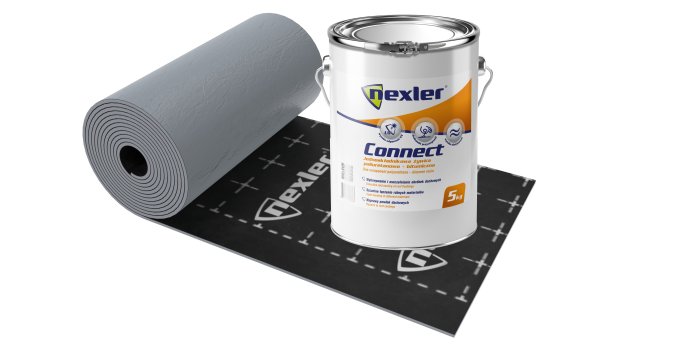
Flashing felts represent a new, highly practical solution within the NEXLER product range, significantly simplifying the creation of roof trimmings. NEXLER felts stand out due to their narrower width (0.5 m instead of the standard 1 m). This smaller size translates directly into more convenient application in challenging, hard-to-reach areas, such as around chimneys or attics. Lighter rolls are easier to transport and carry onto the roof, which directly reduces work time.
Additionally, a narrower roll allows for faster and more precise cutting, eliminating the need to unroll a large surface of the felt. This precision is crucial when working at height, where every movement demands accuracy. Minimizing material waste is another advantage, enabling more economical material management. This is particularly important when fabricating details, as standard rolls often generate a significant amount of unusable scrap.
For specific requirements, consider using NEXLER PREMIUM PYE PV250 S53H, a weldable top-layer bituminous felt. It's constructed on a polyester non-woven base, ensuring excellent weather resistance. Thanks to the high content of SBS modifiers, this roofing felt remains flexible even at low temperature, which increases resistance to aging and cracking under stress.
The NEXLER PJ PYE PV200 S40 flashing felt constitutes a stable base layer, ideal for the top layers in multi-layer roof systems. Thanks to the reinforced polyester nonwoven fabric with glass fiber, it offers superior resistance to mechanical damage and exceptional dimensional stability. This makes it particularly recommended for use as roof starting strips.
For those who prefer simpler and faster solutions, NEXLER Stick is also available, a self-adhesive roofing felt, built on a glass veil. Thanks to its construction, it is exceptionally flexible and does not wrinkle even when performing complex trimmings, which facilitates precise adjustment to the surface. Its design allows for perfect adhesion to the substrate without the need for an open flame, which not only speeds up roofing work but also significantly increases installation safety. This is especially beneficial in areas requiring extra caution, such as wooden roof elements or buildings with heightened fire protection requirements.
A modern solution: NEXLER Connect polyurethane-bitumen resin
For intricate roof details, a superior alternative to traditional felt flashing is NEXLER Connect polyurethane-bitumen resin. This innovative product combines the flexibility and UV resistance of polyurethane with the powerful adhesion and waterproofing properties of bitumen. The result is a durable, seamless coating that ensures a long-lasting seal.
Key Advantages of Using NEXLER Connect
Seamless and Watertight: This resin creates a single, flexible coating with no joints, completely eliminating the risk of leaks that are common with traditional materials.
Extreme Temperature Resistance: The coating remains highly flexible, so it won't crack or loosen, even in harsh weather conditions.
Simple to Apply: You can easily apply the resin with just a brush or a roller on a prepped surface. There's no need for a torch or any specialized equipment.
Ideal for Tricky Spots: NEXLER Connect is perfect for hard-to-reach areas where installing traditional roofing felt would be difficult.
Versatile Application: This resin is a universal solution that sticks perfectly to many different surfaces. You can use it on bituminous felt, metal sheeting (including coated and acid-resistant), concrete, hard PVC, EPDM membranes, and wood-based panels
How to Apply NEXLER Connect Correctly?
The application process is straightforward and doesn't require any specialised equipment. Prepare the Surface: Start by thoroughly cleaning and degreasing the area you'll be working on. Apply the First Coat: Using a brush or roller, apply an even layer of the resin. Reinforce for Durability (Recommended): For increased mechanical resistance, embed the NEXLER Connect Tape into the wet resin. Then, apply a second layer of NEXLER Connect over the tape to ensure maximum durability and a completely watertight seal. The final result is a durable, flexible, and seamless coating that provides reliable protection for your roof's most critical areas.
NEXLER Connect with NEXLER Connect Tape — A Complete Waterproofing System
Combining NEXLER Connect resin with NEXLER Connect Tape provides a complete solution for maximum waterproofing and long-term roof protection. The tape, made from durable polyester non-woven fabric, works perfectly with the liquid coating to create a seamless, uniform, and tight protective layer.
Using both products together allows you to effectively seal the most challenging areas, such as where different materials meet, expansion joints, corners, and other roof trimmings. The tape strengthens and stabilizes the coating, making it more resistant to structural movements and harsh weather. This extra reinforcing layer not only extends the coating's lifespan but also increases its resistance to mechanical damage. Because the NEXLER Connect and NEXLER Connect Tape system doesn't require a torch or any specialized equipment, it offers a safer and more comfortable application process. Together, these products guarantee a waterproofing coating that is both completely sealed and exceptionally durable.