
Effective preliminary covering for pitched roofs
Pitched roofs are one of the most popular solutions, especially in single-family housing construction. Their aesthetics and functionality make them a popular choice among investors. To ensure their durability and tightness, it is essential to use the right preliminary roof covering.
You can read this article in 3 minutes. You will learn from it:
- Why a preliminary covering layer is necessary,
- Which materials work best,
- How to avoid the most common mistakes during installation.
Roof preliminary covering
The protective layer is usually laid on full decking. Its purpose is to protect the roof from precipitation and ensure watertightness until the final roofing is installed. This gives both the investor and the contractor time to purchase and install the final, top roof covering, while at the same time allowing works to be carried out inside the building without waiting for the final covering to be installed.
Advantages and application of full roof decking
The advantage of roofs with full decking is their much greater rigidity and stability, which directly translates into user safety in changing weather conditions. Strong winds or tornadoes can easily tear off roofing laid directly on battens mounted on counter battens and wooden rafters. Full decking (or OSBs) stabilise the entire roof structure and protect the roof covering from gusts of wind, and also facilitate the installation of the final covering. Full decking is also an essential element of roofs made of bitumen shingles.
Types of preliminary covering materials for pitched roofs
Various types of vapour-permeable roofing foils and membranes are often used to create the preliminary covering layer. Due to their low resistance to sunlight, they are always used immediately before installing the final roofing. They can remain without additional protection for only a few weeks, so it is necessary to plan the installation of the final roofing after their installation. In addition, in the case of roofing foils, it is quite difficult to achieve a tight connection between the so-called overlaps.
For these reasons, bituminous underlay products, such as underlay bituminous felt, which are more resistant to UV rays, are used on roofs with full sheathing. Such bituminous felt usually forms thickened areas at the overlaps, which require additional sealing when nailing the counter battens. Underlay bituminous felts are usually installed by welding them to the substrate, which in turn requires great caution when working on wooden roofs due to the risk of the substrate catching fire. Traditional bituminous felts (bituminous felts on construction cardboard) are also chosen as underlay products for full decking. These are not recommended products for use under roofing installed on battens and counter battens. They are products with low strength parameters, low tensile strength, and, for the most part, are not durable or resistant to moisture over the long term of the building’s use.
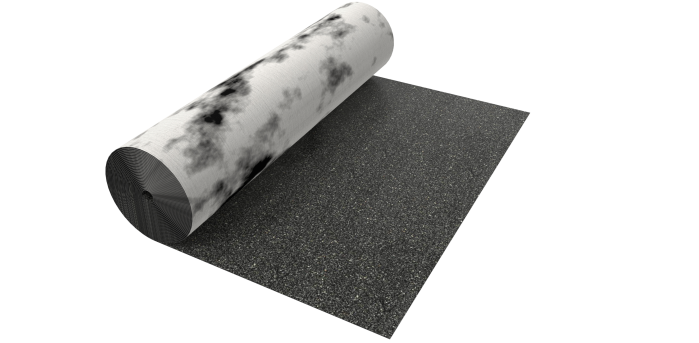
Modern bituminous membrane – NEXLER Optimax PV
The NEXLER brand offers a bituminous membrane that effectively replaces the above-mentioned initial covering materials, bringing measurable benefits in terms of comfort and safety at work to both investors and roofers. This membrane is characterised by very good technical parameters, high mechanical strength and tensile strength. Thanks to the use of a non-woven polyester reinforcement and asphalt modified with linear and radial SBS (2xSBS technology), this membrane can function for up to 3 years without a final covering, which is confirmed by the manufacturer’s 3-year warranty for watertightness and UV resistance without a final covering.
To ensure the effectiveness of the initial covering, it is worth paying attention to several key aspects when installing a bituminous membrane. First of all, the substrate must be carefully prepared, ensuring that it is level and free of contaminants. Next, the membrane should be installed in accordance with the manufacturer’s recommendations, maintaining appropriate longitudinal and transverse overlaps.
The NEXLER Optimax PV membrane is ideal for pitched roofs in both residential and commercial buildings. Thanks to its unique technical parameters, it provides effective protection for the roof against precipitation and UV rays, even for several years without a final covering.
Advantages of the NEXLER Optimax PV membrane
- High strength and UV resistance – thanks to 2xSBS technology and fine granules – sprinkle on the upper side, NEXLER Optimax PV provides high resistance to sunlight.
- Flexibility and ease of installation – the membrane is very flexible, allowing for proper and effective installation on roofs with complex shapes. Installation is simple and does not require the use of specialised equipment. The membrane is installed mechanically using roofing nails or wood screws with washers and by gluing the longitudinal and transverse overlaps with adhesive or bituminous sealant.
- Can be used all year round – NEXLER Optimax PV can be used all year round, even at sub-zero ambient temperatures. Thanks to its low thickness and weight, the membrane is easy to transport and carry onto the roof. The low weight of the product and the finish on its underside further improve adhesion to the substrate, which is a great help for roofers working on steep roof slopes.
Durable pitched roof covering is a key element of construction, ensuring the safety and durability of the entire structure. Thanks to products such as the NEXLER Optimax PV bituminous membrane, investors and roofers can enjoy convenient, safe and quick installation.
| NEXLER Optimax PV – BENEFITS | |
| FOR THE CONTRACTOR | FOR THE INVESTOR |
| Quick installation and low cost | Safe roof insulation – no contact with fire on decked roofs |
| The flexible SBS-modified membrane is tear-resistant and facilitates finishing works at edges and chimneys, even at low temperatures | Quick roof insulation protects against changing weather conditions and allows finishing works to be carried out under the roof |
| The membrane roll is lightweight and easy to carry onto the roof and install, even on very steep roof surfaces | It provides weather resistance in a single layer, including UV resistance for at least 3 years |
| The top side, covered with well-pressed sprinkle, ensures safe movement on the roof without damaging the product | Extended durability of the covering, backed by a long warranty period in systems with pitched roof coverings |
| Additional protection against pests – the material is resistant to martens, reducing the risk of damage to the covering | |
The most common mistakes when installing the underlayment
When installing the underlayment, mistakes are often made that can affect the durability and effectiveness of the roof. Here are the most common ones:
- Improper membrane overlaps – inaccurate joining of strips can cause leaks and seepage.
- Inappropriate selection of fasteners – using the wrong nails or staples can damage the protective layer.
- Installation of roofing foil on full decking – this restricts ventilation and can cause moisture to build up in the structure.
To avoid these problems, it is advisable to follow the manufacturer’ recommendations and use modern solutions such as NEXLER Optimax PV.
Proper preliminary covering of pitched roofs ensures their longevity and safety. By choosing modern bituminous membranes such as NEXLER Optimax PV, investors and roofers gain effective protection, convenient installation and high durability.
Do you have any further questions? Please contact our Technical Department.
Products used

Optimax PV
Bituminous membrane for pitched roofs
Find out more